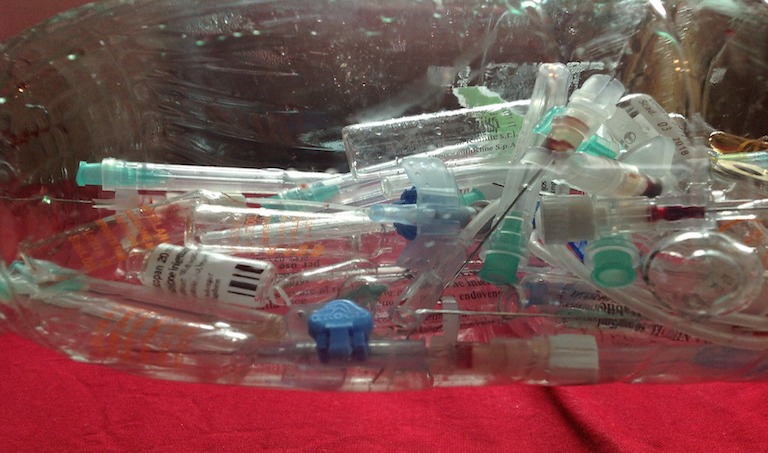
India is likely to generate about 775.5 tons of medical waste per day by 2022 from the current level of estimated 550.9 tons per day growing at the compound annual growth rate (CAGR) of about 7%, reveals ASSOCHAM-Velocity joint study today.
Lack of staff and infrastructure is also a major constraint in the implementation of the rules. The country needs stringent monitoring and evaluation framework to ensure compliance, reveals joint study by ASSOCHAM and Velocity titled ‘Unearthing the Growth Curve and Necessities of Bio-Medical Waste Management in India-2018’ released at the conference on ‘BioMedical Waste Management: Issues, Challenges, Awareness, and Opportunities’ organised by ASSOCHAM here at New Delhi.
Releasing the paper Dr. Kirti Bhushan, Director General of Health Services, Government of NCT of Delhi said, waste management market in India is expected to reach US$ 13.62 billion by 2025. Major waste sections such as municipal solid waste management market, e-waste market, and bio-medical waste are expected to grow at CAGR of 7.14%, 10.03% and 8.14% respectively.
Safe and effective management of waste is not only a legal necessity but also a social responsibility. Lack of concern, motivation, awareness and cost factor are some of the problems faced in the proper biomedical waste management. Cleary there is a need for education as to the hazards associated waste improper waste disposal. Education of the staff about the management or biomedical waste is crucial in today’s health care arena, added Mr. Bhushan.
“To ensure safe and proper disposal of biomedical waste, MoEF has notified Bio-Medical waste Management Rules 2016. These rules shall apply to all persons who generate, collect, receive, store, transport or handle biomedical waste in any form. The rules make hospital and owner of the medical waste treatment facility liable for all damages caused due to improper handling of waste”, Dr. Ravindra Aggrwal, Additional Director (BMW), Directorate of Health Services, Government of NCT of Delhi said at an event.
Mr. Aggrwal further said, bar-coding is evolving and we are waiting for guidelines from the ministry of environment. CPCB has already framed the guidelines and sent it for the government approval.
Mr. Jasal Shah, Founder, and CEO of Velocity MR adds, “Velocity MR (MR is the acronym for Market Research), the Knowledge Partner for this conference is proud to have contributed in bringing insights about Bio-Medical Waste Management in India. We pledge to continue igniting insights on business issues/societal concerns from across the sectors and help all the concerned in marching ahead on their growth curve. I’m sure this report on ‘Unearthing the Growth Curve & Necessities of Bio-Medical Waste Management in India’ will help the healthcare fraternity, investors and our government in understanding the current requirements to bridge the gap and better equip ourselves for the challenges ahead.”
The monitoring bodies, viz. SPCBs and CPCB, should make a strict timeline and visit the healthcare facilities and CBWTFs regularly and update their data on time. The newly formed district level monitoring committee should plan out a strategy and monitor these facilities as required by the rules to fill in this gap, noted the study.
Need for efficiency in segregation and collections. Make it the bottom-line responsibility of CBWTF’s to collect, treats & train healthcare facilities. Since the existing CBWTFs are not enough to treat the quantum of medical waste generated by hospitals, the country should focus on installation of more CBWTFs and should work on increasing connectivity up to the PHC level.
The study outlines the key challenges in Bio-Medical Waste Management in the current healthcare scenario in India. Highlights of the challenges are the speed of data availability, under-reporting of waste generated and handling capacity, the operation of healthcare facility without authorization under BMW Rules, States / UT’s which are yet to develop CBWTFs in the respective State / UT. Lack of awareness among various sections of the staff at all levels co-operates the system not to be able to function effectively.
Inadequate waste management can cause environmental pollution, growth and multiplication of vectors like insects, rodents and worms and may lead to the transmission of diseases like typhoid, cholera, hepatitis, and AIDS through injuries from syringes and needles contaminated with a human. In addition to health risks associated with poor management of medical waste, consideration must also be given to the impact on the environment, especially to the risks of pollution of water, air, and soil in developing countries.
Expansion of healthcare facilities coupled with the recent trend of using disposables has led to an unprecedented burden of health care related waste. Healthcare is one of the largest sectors in India both in terms of revenue and employment. With growing healthcare, there is a requirement of management of bio-medical waste. Bio-medical waste (BMW) although comprises a small proportion of total waste generated (around 1%) but needs special handling and treatment due to its highly toxic contents, and it is highly infectious and can pose a severe threat to human health. Bio-medical waste in India is projected to grow at a rate higher than the overall healthcare services market driven by the expansion of the increasing awareness, improving efficiencies in the system, medical tourism, number of clinics, hospitals, rising of the aging population and new BMW guidelines.