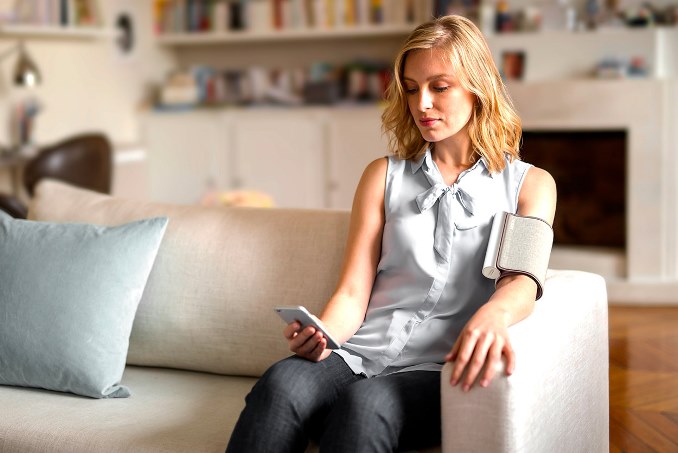
Do you remember Nokia’s tagline ‘connecting people’? Nokia is back with a bang and is poised to connect people on many levels. The technology company is now focusing on networks, 5G, the Internet of Things, telecommunications, and other business-to-business (B2B) solutions. Surprisingly! connected healthcare ranks high on Nokia’s priority. Nokia’s foray into digital health began with the acquisition of Withings, a French digital health company last year and hasn’t looked back ever since. Alexis Normand, Head, Business to Business solutions, Digital Health, Nokia Technologies shares Nokia’s vision for connected healthcare in an e-mail interaction with M Neelam Kachhap.

When did Nokia jump into connected health revolution?
Nokia brings technologies that allow people to thrive. While it has been providing the backbone infrastructure for connectivity for years now, from wireless networks to 5G, Nokia was looking for an opportunity to reconnect directly with end users. Of all the areas where connectivity improves human lives, digital health is certainly one of the most spectacular. We are seeing the coming of age of a digital health revolution that is driven by instant access to information and analytics previously restricted to medical professionals. At the same time, the democratization of smartphones have made smart health sensors and communication so affordable that we can now envisage a world where everyone can have his health station at home, feeding data to virtual hospitals.
These technological disruptions come at a time where population aging and medical improvements have shifted care towards chronic disease management, which requires more patient involvement. This has created a huge market for digital health technologies that provide decision and care support tools for the many. In short, this was the perfect moment for Nokia to enter a revolution that is still at its early stage, and which our company can help to scale.
How did Withings acquisitions align with Nokia’s vision?
Nokia stands for accurate, reliable and quality products accessible to the many. These brand values is exactly what users expect when it comes to digital health. In this spirit, Nokia has been providing connectivity solutions to hospitals and healthcare systems for years. With Withings integration into Nokia, we are entering a phase where that same quality can be brought into people home to extend the reach of care beyond the walls of the hospitals, creating new territories for digital health. This is also a first step for Nokia to reenter the end-user market. With Withings’ consumer devices, Nokia is laying a foundation to grow upon and become once again a great consumer company.
Has Nokia developed on Withings product portfolio?
Since the acquisition in June 2016, Nokia has worked to expand Withings’ product portfolio to reach more people and offer more devices to help people monitor their health seamlessly. We have released a more complete ecosystem of wifi enabled scales, from the release of the high-end Body Cardio scale, that tracks weight of course, but also body composition and heart health, to the Body scale, which retails at the price of a non connected scale, but yet uploads your information to the Nokia secured cloud, to offer smart weight management coaching on an app. This product segmentation has happened as well for our wireless connected blood pressure as well, with a travel and at home version, and our range of activity trackers, from the Steel HR, which tracks activity, sleep, swim and heart rate, to our Steel and Go trackers. We also offer a wi-fi thermometer to make sure you can keep a complete history of fever peaks for the whole family and smart sleep sensors.
What is the focus of Nokia Digital health at the moment?
Regarding products, our focus is not so much to multiply the number of devices you should have at home, but to offer the best device in any given category, offering you the possibility to track as many metrics as possible in a single, seamless go. That is why, for instance, the Body Cardio acts like a one stop health station, keeping track of your health just in a single weigh-in action, by monitoring body mass index, heart rate and also pulse wave velocity, which is basically a good proxy for systolic blood pressure and arterial stiffness.
How do Nokia products empower patients to engage with their health?
This is probably the first question to ask. The user experience of our devices is designed to make health tracking easy and fun, seamless and complete. The fact that a device is connected is set to make the data tracking effortless, and rewarding. We gamify the experience of health tracking through our app.
What’s all this excitement around scales and blood pressure monitors offered by Nokia?
The excitement comes from two types of disruption. One is technological. Health metrics that were previously restricted to doctors can now be monitored by end users at an affordable price. These devices are the very illustration of the consumerization of healthcare, in other words, the medicalization of consumer devices. The second paradigm change is that care becomes patient centric as a result. When the data starts being collected by the patient himself, he suddenly becomes responsible for his health, and care starts being organized as an ecosystem of services around the patient, not the doctor. This is a game changer, as it empowers patients to live healthier lives more simply.
Are there published literature to support your products?
There is an increasingly important scientific literature on the impact of digital health, to the point where scientific journals have emerged to cover this new medical field: the Journal of Medical Internet Research (JMIR) and the Digital Health pages of Nature to name a few, whose editors Eric Topol and Steven Steinhubl from the Scripps Translational Institute have authored papers with the Withings / Nokia Heath Institute’s data scientists.
What these publications tend to show is that higher patient involvement in their own care has proven medical benefits, yet still face resistance from what authors like Eric Topol call medical paternalism. For instance, it is now established that self-blood pressure measurement provides more accurate readings over time and supports better blood pressure control. Similar results are found in diabetes or cardiology. We have set up a dedicated department tasked to work with scientists to establish such proof points and available publications are listed on our Health Institute webpages.
Why are Nokia digital health products not available in India, even though India is one of the largest markets for Nokia Phones?
We are actively working on making these products available in India soon. This means our teams are working on certifications for our medical devices and finding the right price points to compensate specific customs taxes on entry. In addition, we want to make sure we find the best retail partners to offer our devices to the widest number. All these things take more time than we would hope.
Where will Nokia Digital Health be in the next couple of years?
We hope to strengthen our position of Nokia as a global leader in Digital Health. That means making sure our devices and services have a global footprint in the consumer space. To achieve this, we must offer the devices everybody wants, that is devices that collect metrics truly relevant to detect and prevent undesirable health events. But to prepare wider adoption, we must also work with healthcare stakeholders to ensure that this data feeds into electronic health records (EHR) and becomes actionable for care coordinators. In short, we will see patient and medical data integrate into analytical engines that will lead to very practical prevention services. These will offer real peace of mind to patients and their circle of trust.
Pls tell us about Nokia health institute?
The idea of the Nokia Health Institute stemmed from a TED talk by the mayor of Oklahoma, who complained that his city was ranked the most obese in the USA. These statistics triggered a public health campaign to encourage his fellow citizens to engage collectively in a weight loss and activity promotion program, with the underlying idea that we can be healthier together.
We realized at the time that our pool of cloud-enabled scales provided us with the biggest database of longitudinal weight data in the world. This gave us the possibility to extract similar statistics to inform public decision-making and begin using the data to generate proof points on the impact of these devices. To make this actionable, we created a department to analyze this date in full respect of user privacy, to begin showcasing these statistics and work with academics to publish scientific papers.
In the field of open data, we released a real-time Observatory that lets anyone see the state of obesity, activity levels, blood pressure and sleep at country level (in the US, France and UK) in real-time, with regional, age or gender breakdown.
With academics, we have published in the New England Journal of Medicine or other peer-reviewed journals papers regarding the factors influencing healthy weight, sleep or heart health, based on our data sets and surveys we push to end users. We are also working with institutions like Stanford MedX to sponsor medical studies where our devices serve to collect data in between consultations for specific conditions (breast cancer, depression, at risk pregnancies, cystic fibrosis…) areas where our smart device data can inform clinicians on ways to improve care by acting at the right time.
How many institutes have partnered with Nokia and how do they benefit from this partnership?
We have seen over 40 medical institutions in Europe and North America use our devices to improve medical research, including scientists from Harvard, UCLA, UPenn, Duke, Stanford, UCSF, University of Manchester, Leiden University hospital etc,. Our technologies are used to monitor patients with hypertension, congestive heart failure, diabetes, patients after bariatric or hip surgery, and any condition where weight, blood pressure or activity levels are relevant to monitor a patient’s state of health.
For academic or medical teams, we offer a way to understand what happens between consultations, that is which “real-life” factors can influence the success of a therapy. All this information was very hard to come across before our devices came along.More than devices and data, we offer those teams patient care interfaces that lets them monitor cohorts of patients for easy data aggregation, flagging of at risk patients and outreach for early intervention.
Are there any plans to connect with Indian Hospitals and Institutes? Can Indian institutes partner with Nokia?
We would love to partner with Indian hospitals and institutes, and we are open to all projects that advance care and define its future. It will be easier to set up once our devices are fully distributed in India.
Home healthcare is an emerging healthcare delivery model in India with immense potential do you plan to take advantage of this segment and how?
We absolutely want to offer the proper tools to make that happen. That is, beyond our devices, we offer remote care clinicians interfaces now.
How will Big Data impact patient care in the coming years and how does Nokia plan to make its mark in this field?
We must live up to the promise of big data, that is to deliver on 4P medicine; preventive, preemptive, participative & predictive. The more data we collect, the better models will become at identifying undesirable health events before they happen. This is promising for chronic conditions with acute episodes, which can be identified before hand if all the data and analytics is here, e.g., i congestive heart failure. If we can manage this, it will be a fame changer.
To read more such articles subscribe to IndiaMedToday