The report presents a comprehensive assessment of the current and future medical oxygen needs of India and the design and implementation of NMOG
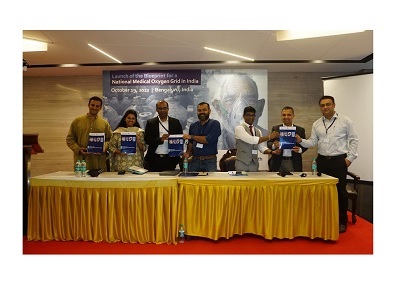
The Blueprint for a National Medical Oxygen Grid (NMOG) in India was launched in Bengaluru by D Randeep, Commissioner, Health and Family Welfare Services, Additional Charge, State Mission Director, ABDM and heralds the advent of self-reliance in the supply of medical oxygen throughout the country.
The Bill & Melinda Gates Foundation, and the Swasth Alliance, the One Health Trust (OHT) embarked on an effort to develop a national oxygen grid, that can ensure the timely availability of medical oxygen which can save lives, including those of children suffering from respiratory ailments, pregnant women, patients with severe malaria, cardiovascular disease, and traumatic injuries.
The report presents a comprehensive assessment of the current and future medical oxygen needs of India and the design and implementation of a National Medical Oxygen Grid (NMOG).
The report finds that the lack of utilisation of medical oxygen, especially outside of major metros, meant that there was both a lack of supply as well as a lack of personnel trained to use medical oxygen. It is vital to fix the problem and ensure that oxygen is widely available and used in the farthest corners of the country during normal times so that the country’s infrastructure is ready for any future crisis.
An ideal oxygen grid for the country would work much like an electricity grid, with central generation (liquid medical oxygen), transmission (tankers and cylinders), storage (liquid and gaseous), and decentralized production (pressure swing adsorption generators and oxygen concentrators). No electricity grid would rely on just decentralized solar or micro-hydro plants without centralized transmission and distribution; similarly, a reliable national oxygen grid should have multiple generation and storage components.
The National Medical Oxygen Grid, if executed, will be a far-reaching endeavour that would unify the medical oxygen supply and consumption industry for the efficient management of the medical oxygen supply in the country, especially during health crises.
The report lays the groundwork for the design and implementation of the grid. It recommends a four-step approach for the design of the NMOG. The first step is to model and plan exercises to forecast the demand that must be met. The second is to divide the demand into manageable distribution areas to ease distribution. The third step is to create a detailed supply-side assessment so that the demands forecasted in step 1 may be met. The final step is to design the grid network that would include detailed steady-state and exigency operational plans.
Some other features of the proposed NMOG are the creation of a large storage reservoir capacity to meet any future demand spurt and an interconnected network allowing for a smooth flow from surplus to deficit areas. Public–private partnership models are deemed imperative for the achievement of oxygen self-sufficiency. The authors propose a robust IT platform that includes IOT devices for sensing and automatic data collection, and GPS systems to enable supply-side management. The report also recommends the drawing of new clinical protocols and training mechanisms for doctors and other health professionals for optimal usage of medical oxygen
Pilot projects are proposed in some states like Uttar Pradesh and Karnataka, as a collaborative effort between different government departments, refillers and hospitals in the division, experts and IT professionals, and funding agencies.
Dr Ramanan Laxminarayan, Founder and President, OHT, said, “The NMOG would work much like the electricity grid, with both centralised production units (Air Separation Units – ASUs) with their storage and transmission systems, and decentralized production (Pressure Swing Adsorption – PSA and oxygen concentrators) to meet the current and future needs of medical oxygen in the country.”
“The despair of April-May 2021 is rapidly being forgotten. This comprehensive report from the One Health Trust is a valuable tool that reviews potential demand, productive capacity, and distribution mechanisms to ensure that data to inform strategy for a National Oxygen Grid are readily available to policymakers,” said Dr Gagandeep Kang, Professor – The Wellcome Trust Research Laboratory, Division of Gastrointestinal Sciences, Christian Medical College, Vellore.
The NMOG would include improved oxygen production capacities to meet predicted and unforeseen demand scenarios. To enhance the reliability, purity, and economy of the medical oxygen supply, robust and extensive logistics systems would be created to ensure efficient supply to the most remote areas. The NMOG design would also incorporate modern telecommunication technologies for effective oxygen flow from source to destination.