Workshop on Ultrasound Guided Regional Anaesthesia Conducted in Kolkata

Ultrasound as we all know is a common investigative tool in the hands of the radiologist for diagnosing a multitude of ailments. Ultrasonography is a non-invasive procedure with virtually no side effects. This has resulted in the expansion of the use of ultrasound in other branches of medical science.
Of late, the field of Anaesthesiology, has seen a spurt in the use of ultrasound for many procedures. Most notably, Anaesthesiologists are using this technology for peripheral nerve blocks wherein the nerves supplying a particular area are visualised by the ultrasound and various medications are given to block the nerve transmission. This results in complete anaesthesia of the area/limb supplied by the nerve. At the same time, the patient remains awake and the risks associated with general anaesthesia can be avoided. Moreover the effects of the medications stay well beyond the duration of the surgery, providing prolonged pain relief to the patient. This also helps in bringing down the costs and side effects of excessive medications as is the case when a general anaesthesia is administered, mentions the press note shared by a city based hospital today.
Another important fact is, that when a patient has significant cardiac and pulmonary disease, general anaesthesia can sometimes lead to destabilisation of the patient. On few occasions these patients are denied surgery due to the risks of general anaesthesia. However, when nerve blocks are used these drawbacks can be circumvented and even very sick patients can be taken up for surgery. Previously the nerve blocks were done using landmark techniques or by using electrical nerve stimulation, but the risks were greater with these techniques and they occasionally also resulted in block failures. On the other hand with the ultrasound one can directly visualise the target nerve and the medications can be directly instilled in that area under real time imaging, with the results being more consistent.
With this objective in mind, Medica Superspecialty Hospital, a Kolkata-based 500-bed hospital housing eight superspecialties and other support services, in association with Daradia Pain Foundation, an institute for management of chronic pain, organised a one- day workshop on “Ultrasound Guided Regional Anaesthesia” on September 17, 2017 in the hospital premises. The aim was to familiarise budding Anaesthesiologists and practitioners with the use of ultrasound and how to perform the various procedures.
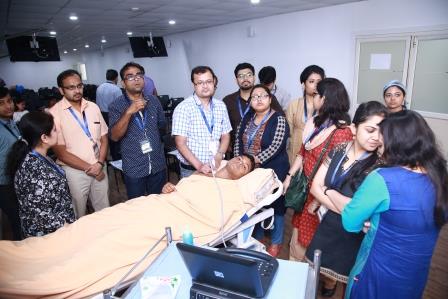
The workshop was attended by over 50 delegates from different medical colleges and hospitals in and around Kolkata. The workshop comprised of a few didactic lectures and hands on sessions where the delegates were able to practice scanning techniques on live volunteers. The delegates found the workshop very lucidly explained and well organised. They were able to learn a lot and went back with newfound confidence and motivation to use these techniques in their own institutes. At the end, a quiz session was conducted pertaining to the topics discussed in the workshop. The delegates were presented with a certificate with CME credit points by the West Bengal Medical Council.
According to Dr. Amiya Kumar Mishra, the head of the Department of Anaesthesiology and organising secretary of the workshop, Medica Superspecialty Hospital is one of the few hospitals in Eastern India practising this modality of Anaesthesia. “We plan to familiarise budding anaesthesiologists and practitioners with the use of ultrasound and how to perform the various procedures,” said Dr. Mishra.
Dr. Alok Roy, Chairman, Medica Group of Hospitals said that going forward, the aim of Medica is to make this technology popular so that other hospitals start using it too. “Seeing the response of the delegates, we plan to organise more such workshops in the near future, explaining more advanced procedures in this arena”, he said