Workshop on application of innovative chemistry and biomaterials to treat corneas at Hyderabad

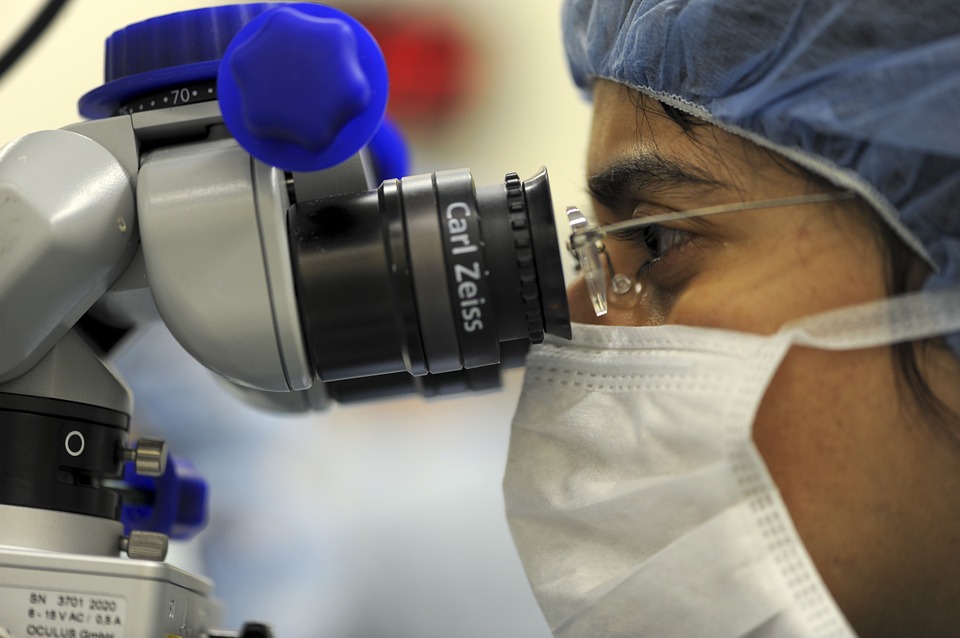
The University of Sheffield, UK and L V Prasad Eye Institute, India are jointly organising a four-day workshop from April 20 – 23, 2017 in Hyderabad to discuss innovative scientific solutions for treating damaged corneas, a part of the eye essential for sight.
This workshop on “Application of innovative chemistry and biomaterials to treat corneas damaged by trauma, disease and infection” is part of the Newton-Bhabha Researcher Links programme, aimed at bringing together UK researchers with their counterparts in India, to exchange ideas and solve global problems.
For the second year in a row, the Royal Society of Chemistry, in association with the British Council through Newton Fund, are investing INR 2.5 crores, to deliver nine Newton Researcher Links workshops, to provide Indian and UK researchers with the opportunity to learn from each other and build long-lasting, sustainable research collaborations.
As many as 10 million people in India suffer from blindness – many of these due to problems with the cornea. A healthy cornea is transparent, but infection, trauma or inherited disorders can cause damage, leading to partial or total loss of sight. Bacterial and fungal infections can also damage the cornea, leading to corneal ulceration and often loss of the whole eye. Bacterial infection in particular is a growing problem, due to increasing resistance to antibiotics. Each of the early career scientists will have the opportunity to present their research, and senior scientists will attend as mentors, to lead discussions and provide guidance.
Stephen Hawthorne, Deputy Chief Executive, Royal Society of Chemistry, explains,“The delegates are mostly early career scientists with expertise in either chemistry or biomaterials, from both India and the UK. They were selected from a large and competitive pool of applications. This is an exciting opportunity for young experts, from diverse backgrounds and with new ideas, to come together and focus on the practical clinical problems of corneal blindness. Through the workshop, we hope to establish new collaborations between the UK and India, and nurture a new generation of young scientists able to respond to this urgent clinical need.”
Mei-kwei Barker, Director, British Council South India said, “The British Council’s global reach and commitment to building strong international relationships enables us to better support Science. Through the Newton Bhabha Fund we will use the UK’s strengths in research and innovation to support greater scientific research capacity in India and build research partnerships between British and India research institutions. Over the years, we have supported 250+ Early Career Researchers and will support another 300 this year. We hope that the skills and knowledge developed through this partnership will make a significant contribution to various fields underpinning science.”
Dr Vivek Singh (Scientist) L V Prasad Eye Institute said, “Our focus is on ocular regeneration, and ways and means to do so using all available science & technology methods, and devise novel solutions wherever possible. The major goal is to eliminate corneal blindness. This would involve (a) ocular stem cell biology and therapy for the cornea, (b) replacement of cells and tissues using biocompatible materials (artificial cornea), (c) explore 3D printing of tissues and organ parts such as the cornea using cells or even using liquid cornea concept for sealing the corneal stromal defects. Ours is a long term commitment to try and tackle the problem of corneal blindness, affecting millions across the world. ”
Professor Sheila MacNeil University of Sheffield said, “Working in partnership with colleagues in L V Prasad has been really inspirational. It is a privilege to be able to work with international caliber clinical innovators to tackle clinical problems of vision which can translate into improved therapy for patients suffering from loss of vision due to cornea problems.”
Leading UK institutions such as University of Edinburgh, University College London, University of Manchester, University of Warwick will be partnering with leading Indian research institutes such as IISER-Kolkata, ICT-Mumbai, IIT Delhi, IIT-Kanpur, JNCASR-Bangalore to conduct workshops on Clean Energy, Anti-Microbial Resistance (AMR), Nanomaterials and Green Technologies in 2017.
In 2016, the Royal Society of Chemistry and the British Council supported six Newton workshops, coordinated by leading University such as Cambridge, Nottingham, IIT Delhi, IIT Madras and IIT Mandi. Over 250 scientists from both the UK and India deliberated and shared their research on issues pertaining to global challenges such as water, AMR, sustainability and energy.